Stewardship Before Scarcity
Every generation eventually discovers that resources are not unlimited.
Sometimes the lesson comes through a drought. Sometimes through declining wildlife populations, depleted fisheries, eroding soil, or rising energy costs. Whatever the resource may be, the pattern is often the same. As long as abundance exists, few people think much about conservation. Once scarcity arrives, everyone suddenly becomes concerned.
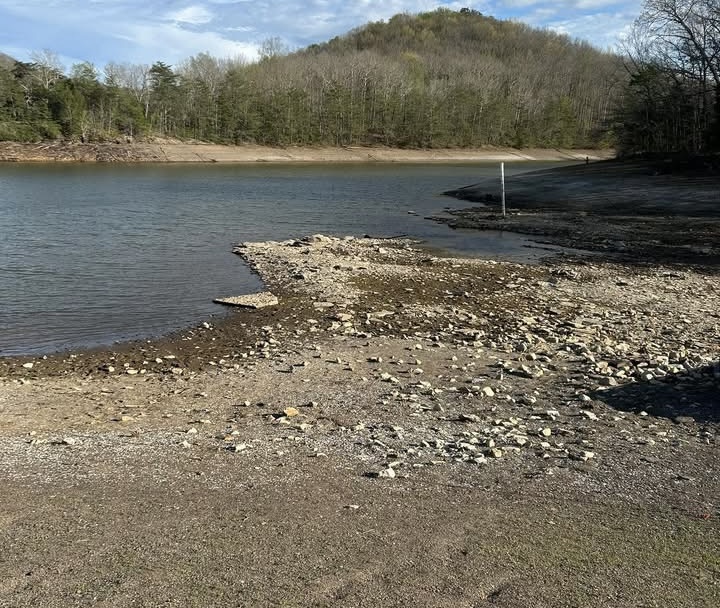
The recent conversations surrounding water shortages in Liberty, Kentucky illustrate this pattern perfectly.
When water is plentiful, few people spend much time worrying about how much their neighbors use, how businesses operate, or whether communities are adequately prepared for the future. But as supplies tighten, the conversation changes. People begin calling for restrictions, fines, and regulations. Activities that seemed acceptable yesterday are suddenly viewed as threats today.
What interests me is not the shortage itself. It is how quickly our thinking changes once scarcity enters the picture.
Freedom is easy to support when resources seem endless. Stewardship is easy to ignore when consequences seem distant. The real test comes when the abundance begins to disappear
Many people today rely entirely upon municipal water systems. There is nothing inherently wrong with that. Municipal water districts provide an important service. They treat water, maintain infrastructure, and distribute it safely to homes, businesses, and farms.
But municipal water systems also create a certain distance between people and the resource itself.
Water arrives when a faucet is opened. Most people don’t think about where it came from, how it got there, or what would happen if the system failed. The resource becomes something that is simply expected rather than something actively managed.
This raises an interesting question.
What if the same infrastructure were privately owned?
The state of Kentucky would still maintain water quality regulations and public health oversight. Water would still need to meet safety standards. Yet ownership would be different.
Would customers think differently about water if they viewed it as a service purchased from a private provider rather than a public utility? Would pricing encourage conservation? Would private ownership create stronger incentives to expand capacity and reduce waste? Or would profit motives create a different set of problems?
I do not pretend to know all the answers.
What I do know is that ownership influences behavior.
People tend to care for what they feel responsible for. They pay closer attention to resources they directly depend upon. A family relying on a private well thinks differently about water than someone connected to a municipal system. A farmer managing a pond, spring, or creek often develops a different understanding of water than someone who only sees it arrive through a pipe.
The issue becomes even more complicated when we consider how many of today’s systems were shaped by public policy.
For years, conservation programs encouraged livestock producers to fence cattle out of streams, ponds, and other natural water sources. The goals were understandable. Reducing erosion, improving water quality, and protecting waterways are worthwhile objectives.
To help achieve those goals, federal and state programs often shared the cost of fencing, water lines, watering tanks, and alternative watering systems. In many cases, those systems were connected to municipal water supplies.
Farmers followed that guidance. Many invested substantial amounts of their own money and labor alongside public assistance to install systems designed to meet conservation objectives.
Today, during periods of water scarcity, some of those same producers find themselves criticized for using municipal water to supply livestock.
That criticism overlooks an important reality.
The dependence on municipal water did not emerge by accident. It was, at least in part, the result of policies and incentives that encouraged producers to move away from natural water sources and toward centralized systems.
Whether those policies were right or wrong is a matter of debate. What should not be ignored is the role they played in shaping behavior.
If society encourages one course of action for decades, it should not be surprised when people follow that course of action.
This observation is not intended as an attack on conservation programs. In fact, it points toward a larger truth.
Incentives matter.
Ownership matters.
Responsibility matters.
The choices people make are often influenced by the systems surrounding them, and those systems can create consequences that were never intended when they were first designed.
The same lesson appears throughout history.
One of the most famous examples is the American buffalo.
For centuries, buffalo herds appeared limitless. Millions of animals roamed the Great Plains. Their numbers seemed so vast that few people imagined they could ever disappear.
Yet abundance created complacency.
Because the resource seemed endless, stewardship was neglected. By the time people recognized the danger, buffalo populations had been pushed to the brink of extinction
The uncomfortable truth is that government intervention eventually played a role in preserving what remained.
As someone who generally prefers local responsibility and limited government, I find that reality difficult to ignore.
Yet I believe many people draw the wrong lesson from it.
The lesson is not that government should manage every resource.
The lesson is that stewardship failed long before government became involved.
By the time intervention became politically acceptable, the crisis already existed. The opportunity for voluntary action had largely passed. The problem had become severe enough that many people were willing to accept solutions they might otherwise have opposed.
That pattern repeats itself throughout history.
When people neglect responsibility, they often invite control.
When communities fail to prepare, emergency measures become easier to justify.
When stewardship is abandoned during times of abundance, restrictions become more likely during times of scarcity.
This is not an argument against conservation. Quite the opposite.
Conservation is one of the most important responsibilities any society can undertake. Hunters understand this. Farmers understand this. Ranchers, foresters, fishermen, and landowners understand this. The people closest to the resource are often the first to recognize that healthy ecosystems and sustainable use are not luxuries. They are necessities.
The question is not whether conservation matters.
The question is when conservation occurs.
Do we conserve because we recognize our responsibility while resources remain abundant?
Or do we conserve only after a crisis forces the issue?
Those are two very different paths.
The first preserves both resources and freedom.
The second often preserves resources only after some measure of freedom has already been surrendered.
I am not naive enough to believe every problem can be solved without institutions, regulations, or government involvement. History provides examples that challenge such a belief. At the same time, I remain skeptical because of the tendency for governments and large institutions to expand their influence during crises and rarely surrender that influence afterward.
That is why stewardship matters so much.
Every resource responsibly managed by individuals, families, communities, conservation groups, and local organizations is one less resource likely to become the subject of emergency intervention later.
A society built on responsibility requires less control than a society built on dependence.
Perhaps that is the real lesson hidden within every drought, every depleted resource, and every conservation success story.
The goal should not be to wait for shortages and then argue over restrictions.
The goal should be to cultivate a culture of stewardship strong enough that shortages become less likely in the first place.
Freedom and conservation are not opposing values.
In many ways, they are partners.
The more responsibly we manage the resources entrusted to us, the less often we will find ourselves asking others to manage them for us.
That is not merely a lesson about water.
It is a lesson about liberty, responsibility, stewardship, and the kind of society we choose to build.